

Maintaining your car’s paint mostly comes down to six habits: washing it safely, drying it properly, removing bird droppings and sap before they sit for days, using the right protection for your paint type, treating chips and scratches early, and staying away from harsh products and rough technique. None of it needs to be expensive, and none of it needs a professional detailer for most day-to-day upkeep. This guide covers what actually works for Australian conditions, what’s worth buying, and when a paint problem is better handled by someone else — or not worth fixing at all.
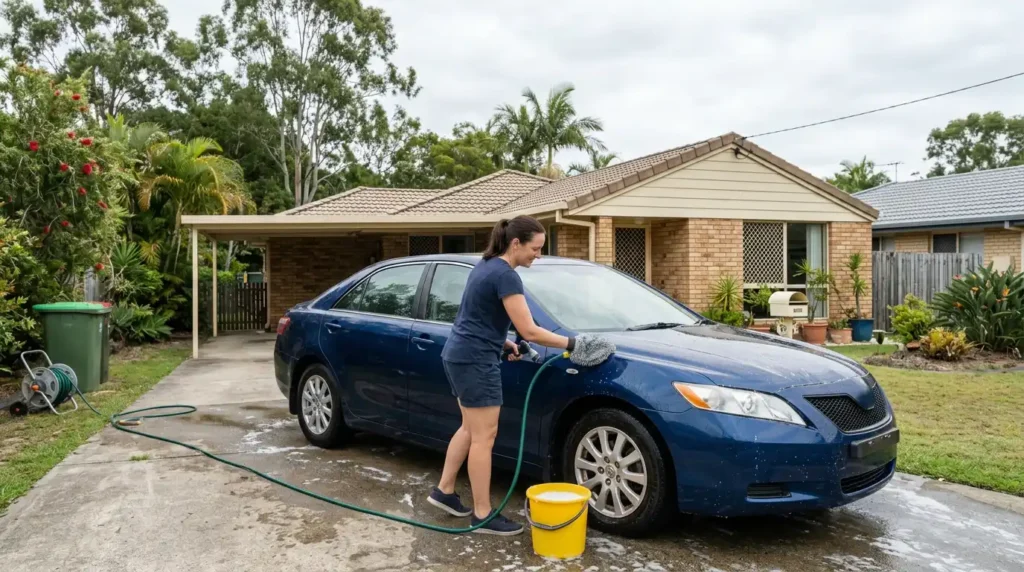
Save this list for your next wash:
South East Queensland is genuinely tough on car paint. UV intensity and heat can accelerate the breakdown of wax, sealants and, over years, even clear coat itself, which is why manufacturers of paint-care products generally recommend more frequent reapplication in hot, sun-exposed climates than their packaging’s “standard” interval assumes. Add to that a long list of local contaminants: bird and bat droppings, tree sap (particularly under jacarandas, figs and gums common in Brisbane, Logan, Ipswich and Moreton Bay streets), insects, storm-season grit, and mineral or hard-water spotting from sprinklers or humid overnight condensation. Vehicles regularly driven near the coast (the Gold Coast, Bayside, Redlands) also pick up salt-laden air, which can accelerate corrosion in stone chips and exposed metal if left untreated.
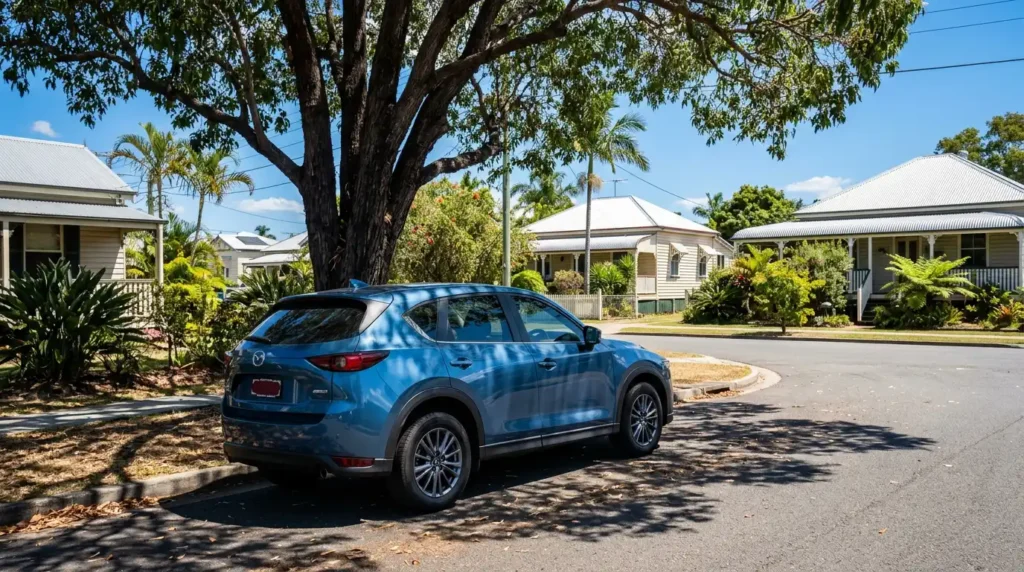
None of this affects every car the same way. A garaged weekend car in an inland suburb faces a very different set of risks to a daily commuter parked under a fig tree in a coastal suburb. The advice below is written so you can match it to your own situation rather than follow one blanket rule.
Not all paint is the same, and using the wrong product on the wrong surface can cause real damage. Before buying anything, work out what you’re actually dealing with:
If you’re not certain what you’re working with, test any new product on a small, inconspicuous area — inside a door shut-face or under the fuel-filler flap — before applying it across a whole panel.
You don’t need a large collection of gear to wash a car safely. Below is a realistic starter kit, with budget and better-value options from retailers with an Australian footprint. Prices and availability were checked in July 2026 and will change — always confirm current pricing and stock at the retailer before you buy.
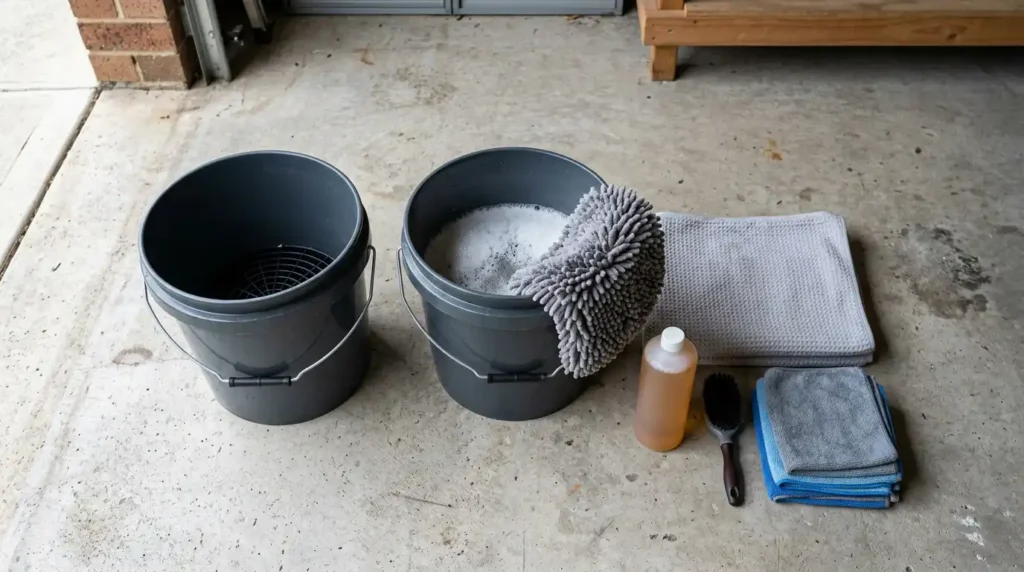
| Item | Why you need it | Budget option | Better-value upgrade | Where to look | Indicative price | Compatibility note |
|---|---|---|---|---|---|---|
| Two buckets | Core of the two-bucket method (see below) | Any two household buckets | Dedicated wash buckets with lids | Bunnings, Supercheap Auto | From around $10 each | Any clean bucket works — cleanliness matters more than branding |
| Grit guards (x2) | Trap grit at the bottom of each bucket so it isn’t picked up again by your mitt | Generic inserts | Branded grit guards sized to your buckets | Supercheap Auto, Repco | Roughly $15–25 each | Confirm they fit your bucket diameter |
| Microfibre wash mitt | Safer on paint than a sponge; traps dirt instead of dragging it | Entry-level microfibre mitt | Premium chenille or noodle mitt | Supercheap Auto | Roughly $4–17 depending on style | Never use the mesh side (if fitted) directly on paint |
| pH-appropriate car shampoo | Cleans without stripping wax/sealant the way dish soap can | Value car shampoo | Wash-and-wax combo shampoo | Supercheap Auto, Repco, Autobarn | Roughly $10–20 per bottle | Dishwashing liquid is not designed for painted surfaces and can strip protection |
| Separate wheel brush or mitt | Keeps brake-dust grit off your paint tools | Basic wheel brush | Soft wheel-specific mitt/brush set | Supercheap Auto, Repco | Roughly $10–25 | Label it clearly so it’s never mixed up with the paint mitt |
| Drying towel | Reduces water spotting and swirl marks versus air-drying | Standard microfibre drying towel | Large waffle-weave or twist-pile towel | Supercheap Auto, Autobarn | Roughly $15–35 | Wash separately from wheel cloths |
| Trigger-nozzle hose attachment | Lower water use than an open hose; helps with stormwater-friendly washing | Basic trigger nozzle | Adjustable-pattern nozzle | Bunnings, Supercheap Auto | Roughly $10–20 | N/A |
| Contaminant remover (clay bar or clay mitt) | Lifts bonded contamination a wash alone won’t remove | Clay bar with lubricant | Clay mitt (easier for beginners) | Supercheap Auto, Repco | Roughly $20–40 | Always use with a dedicated clay lubricant, never dry |
| Applicator pads + microfibre buffing cloths | For applying and removing wax/sealant/ceramic spray | Foam applicator pad, basic cloths | Multi-pack of dedicated applicator and buffing cloths | Supercheap Auto | Roughly $10–20 for a pack | Use separate pads for wax and for tyre/plastic dressing |
| Wax, sealant or ceramic spray | Adds a protective, water-shedding layer | Entry-level spray wax | Synthetic sealant or consumer ceramic spray | Supercheap Auto, Repco | Roughly $15–40 depending on product | See comparison table below — match to your paint type |
Stick to established automotive brands sold through Supercheap Auto, Repco or Autobarn rather than unfamiliar marketplace listings — you have far less certainty about what you’re actually applying to your paint.
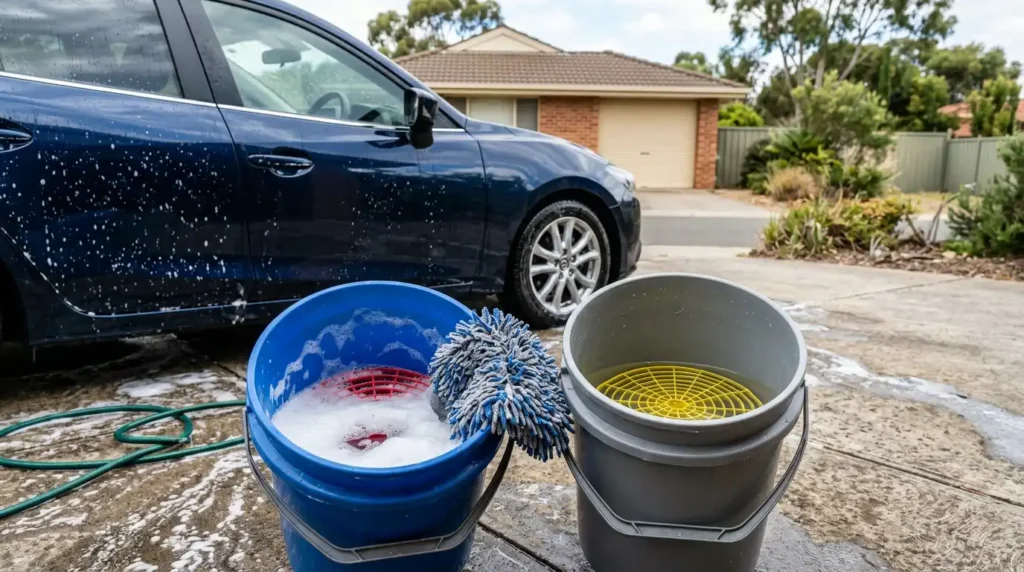
How often should you actually wash? It depends on the vehicle and its situation, not a fixed number:
Soapy wash water carries oils, brake dust and detergent residue. If it runs into a street gutter, it generally ends up in the stormwater system, which in Brisbane and most South East Queensland council areas drains untreated straight into local creeks, the Brisbane River or Moreton Bay. Brisbane City Council specifically advises residents to wash cars on the grass where possible, or use a compliant commercial car wash, to keep soap suds out of stormwater drains.
Practical steps:
The longer a contaminant sits, the more likely it is to etch or stain the clear coat. General rule: don’t scrape, don’t scrub dry, and don’t guess with random household chemicals.
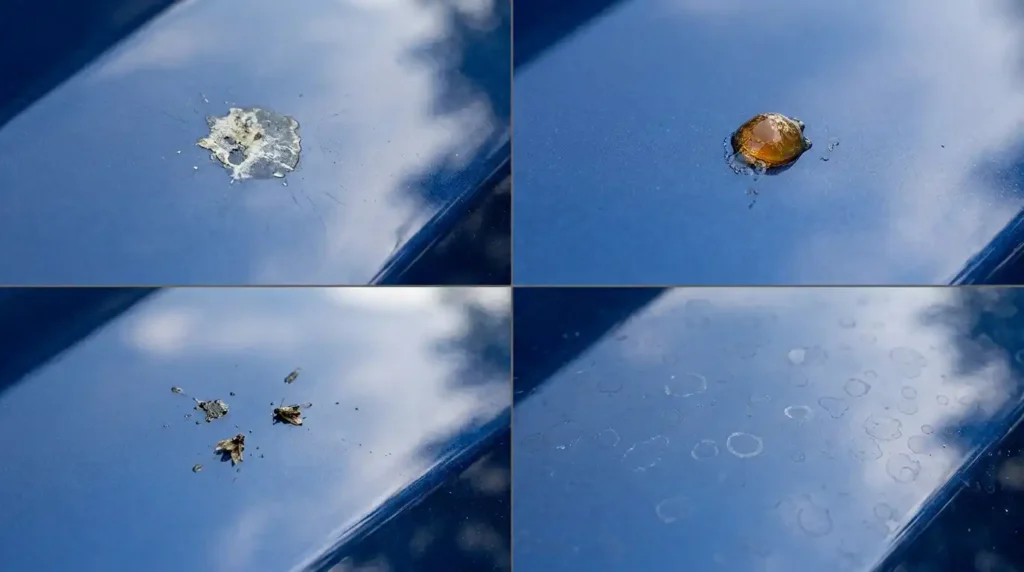
Bird or bat droppings — Don’t wipe dry or scrub immediately; the grit in them can scratch paint before you’ve even seen it. Soften first with a wet microfibre cloth or a dedicated bug-and-tar remover, let it sit briefly per the product’s instructions, then lift gently. If it’s left a dull mark or etching after cleaning, that’s a job for a detailer.
Tree sap — Don’t pick at it with a fingernail or scraper. Soften with a proper tar/sap remover or, if unavailable, warm soapy water and patience, then lift with a microfibre cloth. Repeated attempts on the same spot can dull the clear coat, so stop and seek professional help if it’s not shifting easily.
Insects — Similar approach to droppings: soften before wiping, using a bug-remover product or a wet cloth left to sit for a few minutes.
Road tar — Use a dedicated tar remover rather than solvents not designed for paint; test on a small area first.
Water spots — Usually mineral deposits from hard water or sprinklers. A dedicated water-spot remover or a light detailer spray can often shift them; deep, etched spotting that survives a proper clean may need polishing by someone experienced.
Dust and road grime — Generally handled by a normal wash; a clay bar/mitt helps if the surface still feels gritty after washing.
Coastal salt residue — A more frequent rinse (even without full shampooing) helps limit build-up, particularly around wheel arches and lower panels.
Unknown contamination or overspray — Don’t guess with strong household chemicals. If a normal wash and a proper detailer spray won’t shift it, this is a job for a professional detailer who can assess the surface first.
Stop and get professional advice if scrubbing isn’t working — repeated attempts with the same or a stronger product are more likely to damage the clear coat than to fix the mark.
| Traditional wax | Synthetic paint sealant | Consumer ceramic spray | Professional ceramic coating | |
|---|---|---|---|---|
| Ease of application | Easy | Easy | Easy | Requires professional preparation and application |
| Typical purpose | Gloss enhancement, short-term protection | Longer-lasting protective barrier | Hydrophobic top-up layer, added gloss | Long-term chemical and scratch resistance |
| Relative durability | Shortest — follow the product’s own guidance | Longer than wax | Similar to or slightly longer than wax, per manufacturer | Longest, typically measured in years rather than weeks |
| Preparation required | Clean, dry paint | Clean, dry paint | Clean, dry paint | Full paint decontamination and often correction beforehand |
| Approximate cost category | Low | Low–moderate | Low–moderate | High (professional service) |
| Maintenance | Reapply regularly per label | Reapply less often than wax | Reapply as directed, often as part of routine washing | Occasional compatible maintenance spray only |
| Suited to | Anyone wanting an easy gloss boost | Owners wanting less-frequent reapplication | Owners wanting a quick top-up between washes | Owners planning long-term ownership or maximum protection |
| Key limitation | Shortest-lived, most frequent reapplication | Still needs periodic reapplication | Not a substitute for a properly cured ceramic coating | Cost and need for professional application; not DIY-friendly |
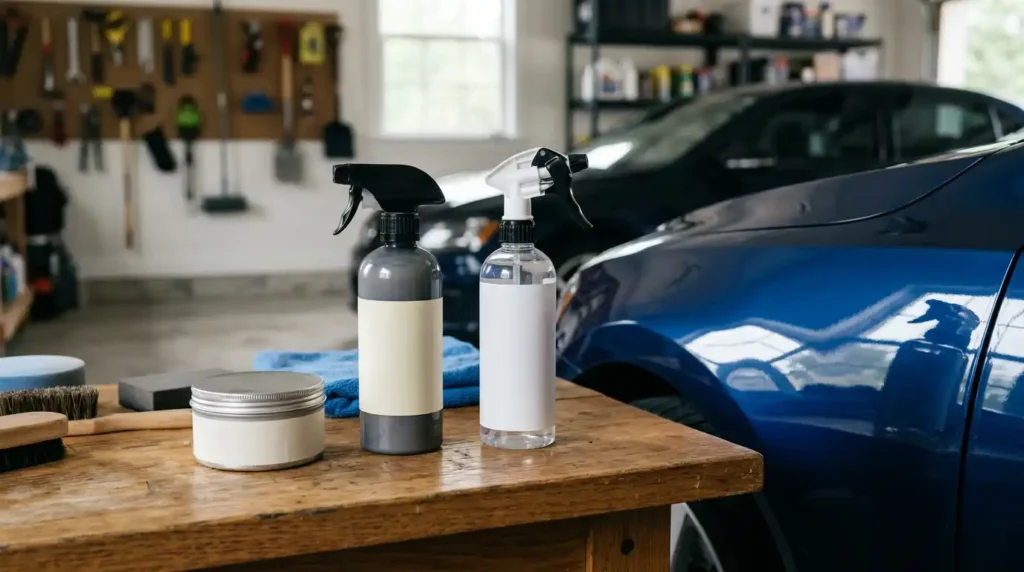
A retail “ceramic” spray is a different product to a professionally applied and cured ceramic coating — treat spray-on ceramic products as a wax/sealant alternative, not as equivalent long-term protection. Always follow the specific product’s stated reapplication interval rather than a generic industry figure, since formulations vary.
| Type | What it looks like | Safe to clean and monitor | Cautious DIY touch-up may help | Best left to a detailer | Needs a paint repairer/panel beater |
|---|---|---|---|---|---|
| Light transfer marks (e.g., from brushing against something soft) | Faint marks, no visible depth | ✔ | |||
| Fine clear-coat scratches | Visible in bright light, doesn’t catch a fingernail | ✔ | Possibly, for polishing | ||
| Swirl marks | Fine circular marks, usually from washing/drying technique | ✔ | ✔ (machine correction) | ||
| Deeper scratches | Catches a fingernail, visible colour coat | Sometimes with matched touch-up paint | ✔ | Possibly, if extensive | |
| Stone chips | Small, sharp-edged marks, often on the front bumper/bonnet | ✔ with correct paint code | If rust has started | ||
| Exposed primer or bare metal | Colour coat missing, different colour visible | ✔ | |||
| Existing rust at a chip or scratch | Orange/brown discolouration, rough texture | ✔ | |||
| Peeling or failed clear coat | Clear layer visibly lifting or “fogging” | Possibly for isolated small areas | ✔ for widespread failure |
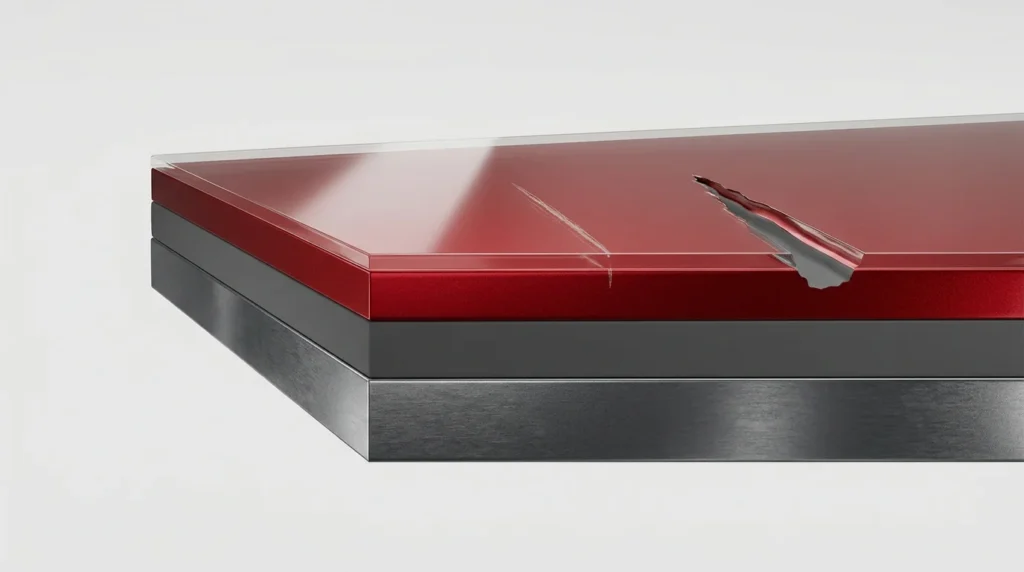
Not every scratch exposes bare metal, and not every mark needs a repairer — most light marks are genuinely fine to clean and simply keep an eye on. The risk is the other direction: aggressive machine polishing by someone without paint-depth measuring equipment and experience can cut straight through a thin clear coat, turning a cosmetic mark into a much more expensive problem. If you’re not confident, get a second opinion before reaching for a machine polisher.
For touch-up paint, confirm your exact paint code (usually on a compliance plate or in the owner’s manual) before buying anything, and follow the product’s application instructions closely. Even with the correct code, some colour mismatch is common due to fading, prior repairs, or how the paint is applied — touch-up paint is a reasonable way to seal a chip and slow corrosion, not a guarantee of an invisible repair.
Do not do this:
Where the safe approach depends on your specific paint, coating or product, follow that manufacturer’s instructions over generic advice.
| Trigger | Action |
|---|---|
| After any contamination (droppings, sap, insects) | Treat promptly using the relevant method above — don’t wait for the next scheduled wash |
| Routine wash | As suited to your vehicle’s situation (see wash-frequency guidance above) |
| Monthly inspection | Walk around the car in good light, checking for new chips, scratches or water spotting |
| Seasonal protection check | Confirm your wax/sealant/ceramic spray is still beading water; reapply per the product’s own interval, generally more often through a hot Queensland summer |
| Before a long trip | Full wash, check tyres and screens, treat any fresh chips |
| After coastal travel | Rinse to remove salt residue, particularly around wheel arches and lower panels |
| Before selling the vehicle | See the section below |
Treat these as situational prompts rather than a rigid calendar — a garaged classic and a tradie’s daily ute need very different rhythms.
If you’re preparing to sell, a handful of low-cost, low-risk steps go a long way toward presentation without any real financial exposure:
These help a buyer (or a buyer’s assessor) form an accurate impression quickly, and cost very little.
What’s less likely to be worth it on an older or already-affected vehicle:
Cosmetic spending doesn’t come with a guaranteed return, and on an older vehicle with other issues, it can easily cost more than it adds to what a buyer is willing to pay. For a broader checklist of what’s worth doing before you sell, see our guide on 10 things to consider before selling your car in Brisbane.
This is the point where a cosmetic question becomes a financial one. Some things worth weighing up:
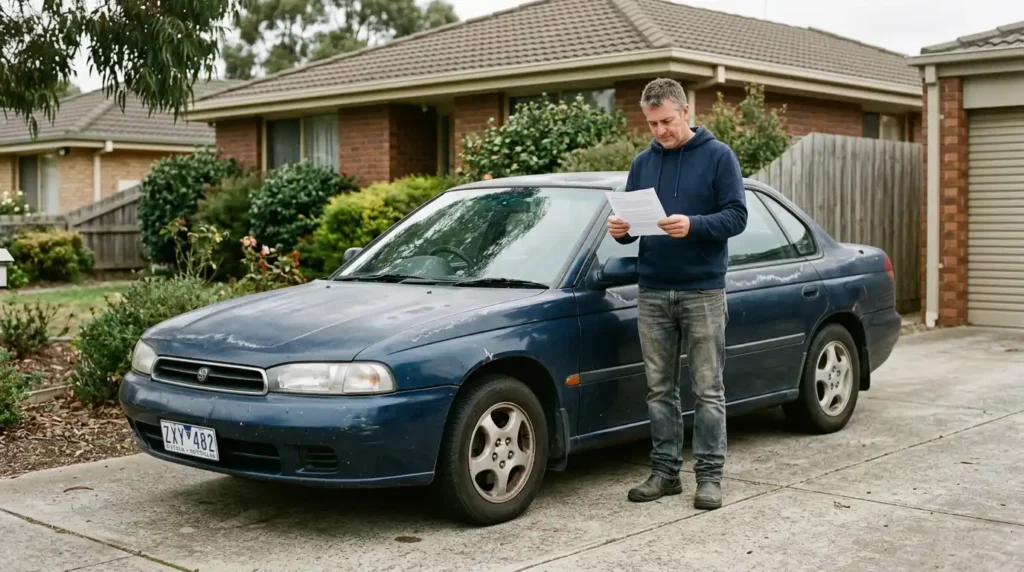
There’s no single right answer here, and this isn’t a push toward selling — plenty of vehicles are absolutely worth a cosmetic repair. But when the total cost of getting an older or damaged vehicle looking right starts to approach or exceed what it’s worth once fixed, it’s worth being honest about that math before committing. Our guide on 5 signs you should sell your car covers this decision in more depth if paint damage is one of several issues you’re weighing up.
If you’ve still got a specific question — like whether dishwashing liquid is really off-limits, or how to tell if a scratch has hit bare metal — check the FAQs section below before you reach for anything.
Most paint problems are avoidable with a careful wash routine, prompt contaminant removal, and protection suited to your specific paint type — and none of that needs to cost much. Where a car has moved past routine care into genuine repair territory — widespread fading, rust, accident damage or costly clear-coat failure — it’s worth getting real quotes before assuming a respray is the answer, and weighing that cost against what the car is actually worth.
If you’ve gone through that process on an older vehicle and decided further repair isn’t worthwhile, Aus Cash for Cars can assess unwanted vehicles in Brisbane and verified surrounding service areas, with payments of up to $9,999 depending on the vehicle and a current assessment. You can reach us on 0491 108 936. If your car simply needs a wash and some patience instead, hopefully this guide has covered what you need.
Product availability and indicative prices checked in July 2026.
We’ve compiled answers to the questions Australian car owners ask us most often about paint care, protection and touch-ups below.
1. How often should I wash my car in Brisbane? It depends on how and where you park it. A garaged weekend car might only need a wash monthly; a daily commuter parked under trees or near the coast may need attention weekly or after specific contamination like sap or salt residue.
2. Can I use dishwashing liquid to wash a car? It’s best avoided. Dishwashing liquid is formulated to strip grease, which means it can also strip existing wax or sealant and, over repeated use, isn’t as paint-friendly as a proper pH-appropriate car shampoo.
3. Is wax, sealant or ceramic spray better for an older car? There’s no single right answer — it depends on your paint’s condition and how much reapplication effort you want. A traditional wax is easy and forgiving; a synthetic sealant lasts longer between applications; a consumer ceramic spray offers a quick top-up layer. None of the three is a substitute for a professionally applied ceramic coating.
4. How do I remove bird droppings without scratching the paint? Don’t wipe it dry. Soften it first with a wet microfibre cloth or a dedicated bug-and-tar remover, let it sit briefly, then lift gently rather than scrubbing.
5. Can faded car paint be restored at home? Mild fading can sometimes be improved with a compatible cleaner/polish and protection product, but this depends heavily on how deep the fading is and the paint’s condition. Significant fading, especially with any clear-coat failure, is generally a job for a professional detailer or paint specialist.
6. How can I tell whether a scratch has reached bare metal? If you can see a different colour than your paint (usually grey primer or bright metal) inside the scratch, it’s gone through to bare metal or primer and needs prompt attention to limit corrosion. A scratch that only shows your paint colour, with no colour change, is usually more superficial.
7. Is touch-up paint suitable for stone chips? Yes, for small, isolated chips — but only after confirming your exact paint code from your compliance plate or owner’s manual. Even with the correct code, some colour variation is common due to fading or application technique.
8. Should I polish my car before applying wax? Polishing (correction) and waxing (protection) are different steps — polishing addresses surface imperfections like swirl marks, while wax or sealant adds a protective layer afterwards. If you’re not experienced with polishing, particularly with a machine polisher, get advice first, since aggressive polishing can remove clear coat.
9. Can a pressure washer damage car paint? Used carelessly, yes — holding the nozzle too close to the surface, seals or existing chip edges can cause damage. Keep a reasonable distance and use a wide fan pattern rather than a narrow, concentrated jet.
10. How do I care for matte paint or a vinyl wrap? Use only products the paint or wrap manufacturer specifically states are safe for matte or wrap surfaces — standard glossing waxes and some solvents can permanently alter or damage these finishes.
11. Is a full respray worthwhile before selling an old car? Usually not, on its own. A respray is a significant cost that rarely returns its full value in the sale price of an older vehicle, particularly if there are other mechanical issues affecting what a buyer will pay.
12. Does clean paint increase a car’s sale value? Clean, well-presented paint can improve a buyer’s first impression and confidence, but overall valuation depends on far more — make, model, age, kilometres, mechanical condition, accident history, registration, service history and market demand. Presentation helps; it doesn’t override the fundamentals.
We proudly provide a top-class Cash for Cars and Free Car Removals facility to all our clients across Brisbane and surrounding suburbs. Contact us today for a Free Quote!

@ 2022 auscashforcars.com.au. All rights reserved.
Brisbane Web Design, SEO, & Digital Marketing
 Call Us