

If your engine has started to run unevenly, hesitate under acceleration, idle roughly, or use noticeably more fuel than usual, worn or fouled spark plugs are one possible cause. They are not the only one. Ignition coils, fuel injectors, vacuum leaks, sensors and even low compression can produce very similar symptoms, so this guide treats each sign as a clue worth investigating rather than a confirmed diagnosis.

This article applies mainly to petrol engines and to petrol-electric hybrid vehicles that still use a combustion engine for part of their operation. Fully electric vehicles and diesel engines do not use spark plugs in the same way, so the advice below does not apply to them. If any of these symptoms persist, the safest next step is to have the vehicle properly diagnosed rather than guessing which part to replace.
A spark plug’s job is to ignite the compressed air-fuel mixture inside each engine cylinder at precisely the right moment. The resulting small, controlled explosion pushes the piston down and drives the engine. For that to happen consistently, the plug needs the correct specification for the engine, the correct electrode gap, a clean firing tip, and a properly torqued installation.
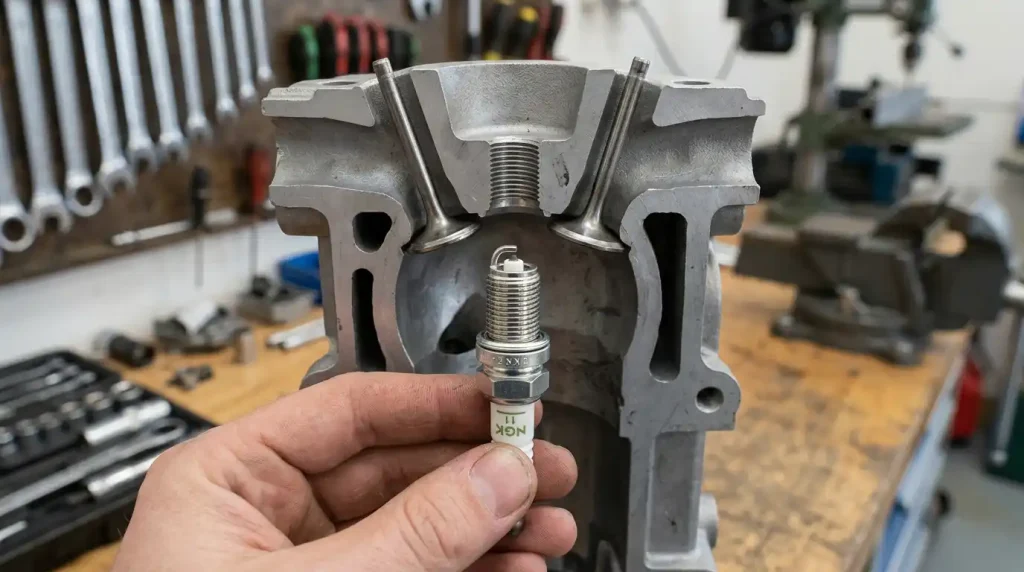
Over time and use, the electrodes wear, the gap can widen, and deposits from fuel, oil or short-trip driving can build up on the tip. Any of these changes can make the spark less reliable, which is why worn or fouled spark plugs are one of the more common contributors to rough running in an older petrol engine — though, as covered throughout this guide, they are far from the only possible cause.
A misfire happens when a cylinder fails to fire properly, or fires only sporadically. It can feel like a stumble, a jerk, or a brief loss of power, and it’s often accompanied by an uneven, choppy note from the engine rather than a smooth hum. On many modern vehicles, the engine control system monitors combustion and will illuminate the check engine light — sometimes flashing — if misfires are frequent enough to risk damaging the catalytic converter.
A persistent misfire shouldn’t be ignored. Worn or fouled spark plugs are a common contributor, but a misfire can equally point to a failing ignition coil, damaged ignition leads (where fitted), a fuel-delivery problem, a vacuum leak, or in more serious cases, low compression or oil entering the combustion chamber. Because several of these faults produce an almost identical feel from the driver’s seat, a misfire genuinely needs to be diagnosed rather than assumed.
Hesitation — a flat spot, a stumble, or a noticeable lack of response when you press the accelerator — often becomes more obvious under load, such as pulling away from a stop or overtaking. This is because the engine is working harder and any weakness in ignition, fuel delivery or air intake is more likely to show up.
Spark plugs that are worn or incorrectly gapped can contribute to this kind of hesitation. So can a weak ignition coil, a partially clogged fuel injector, a dirty air filter, an intake or vacuum leak, or a faulty sensor feeding incorrect information to the engine’s computer. Because the symptom is the same regardless of which of these is at fault, it’s not something a driver can reliably pin down from behind the wheel.
Difficulty starting — particularly needing longer cranking than usual, or the engine catching and then stalling — can be associated with a spark plug that is worn, fouled, or no longer bridging the gap reliably. An unstable or shaking idle, where the engine speed rises and falls or the whole car vibrates more than normal at a standstill, can point the same way.
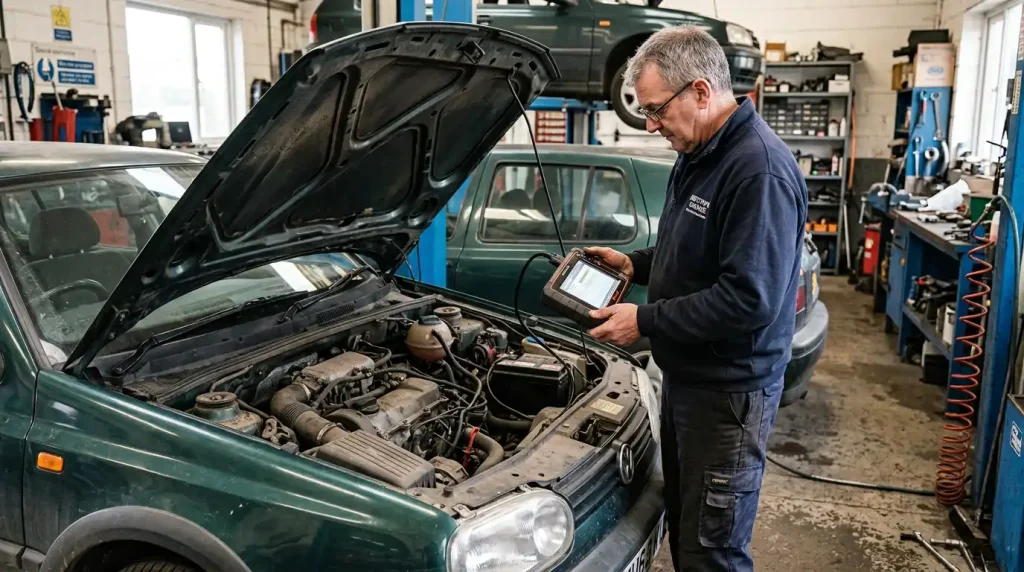
These symptoms overlap heavily with other systems, though. A weakening battery, a failing starter, worn ignition coils, low fuel pressure, a dirty throttle body, a vacuum leak or a sensor fault can all produce hard starting or a rough idle. Age and mileage also mean multiple minor issues can be compounding at once, which is part of why a proper diagnosis matters more than a single-symptom guess.
Worn or fouled spark plugs can cause incomplete or inconsistent combustion, and an engine that isn’t burning fuel efficiently will typically use more of it to do the same job. If you’ve noticed your fuel gauge dropping faster than usual, or a trip computer showing worse-than-normal consumption, it’s worth paying attention.
On its own, though, increased fuel use is not proof that spark plugs are the cause. Under-inflated tyres, changed driving conditions, a clogged air filter, faulty oxygen or airflow sensors, leaking injectors and other mechanical issues can all push fuel consumption up. It’s a symptom worth investigating alongside others, not a standalone diagnosis.
A few additional indicators are worth keeping in mind alongside the four signs above:
Spark plugs get very hot during operation and sit inside pressurised, moving engine components. Inspecting or removing them isn’t something to attempt on a hot engine, and confirming their condition is best left to a qualified technician with the right tools.
Because ignition, fuel and mechanical faults can all present in similar ways, it helps to see the overlap laid out clearly. The table below is a general guide only — professional testing is the only reliable way to confirm which system is actually responsible.
| System | Symptoms it can share with worn spark plugs |
|---|---|
| Spark plugs | Misfire, rough idle, hesitation, hard starting, increased fuel use |
| Ignition coils | Misfire, rough idle, hesitation, check engine light |
| Ignition leads (where fitted) | Misfire, hard starting, rough idle |
| Fuel injectors | Hesitation, rough idle, increased fuel use, misfire |
| Air intake or vacuum leaks | Rough idle, hesitation, increased fuel use |
| Sensors (e.g. oxygen, airflow) | Hesitation, rough idle, increased fuel use, check engine light |
| Compression or internal engine issues | Misfire, rough idle, loss of power, oil-related fouling |
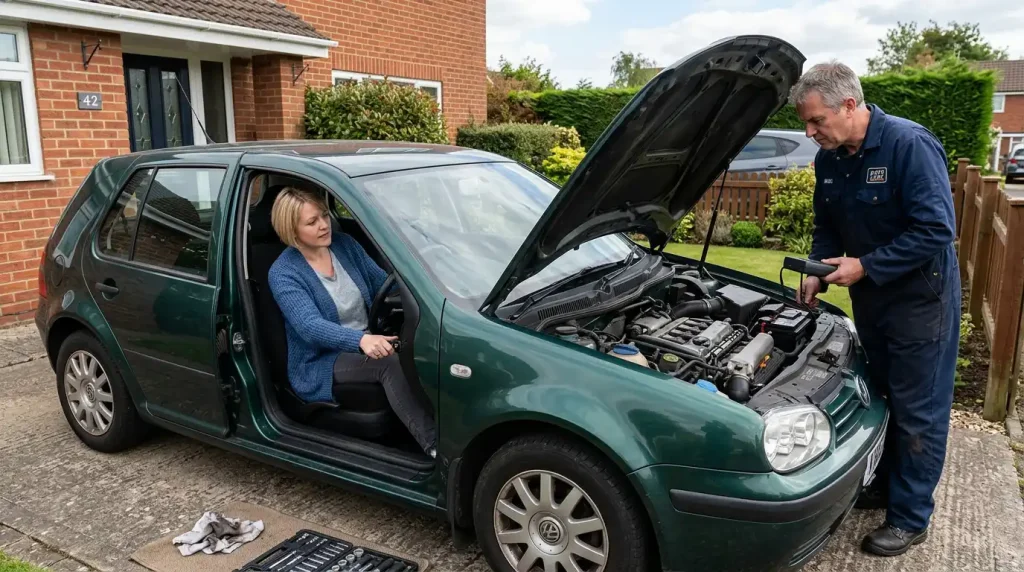
A technician investigating these symptoms will typically work through a process rather than jumping straight to parts replacement. This generally includes scanning the engine control system for relevant fault codes, reviewing the vehicle’s service history, and — where appropriate — removing the spark plugs to check their condition, specification and gap against the manufacturer’s requirements. Ignition coils and related wiring are usually tested at the same time, since a plug and coil fault can look identical from the driver’s seat. Depending on what’s found, fuel delivery, air intake and compression may also need to be checked before a cause is confirmed.
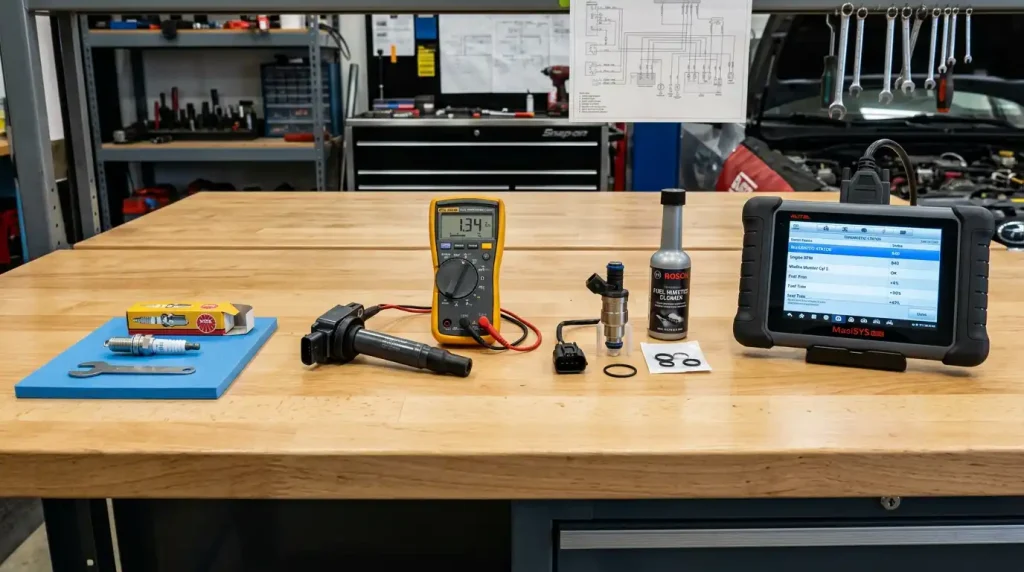
There is no single replacement interval that applies to every vehicle. Timing depends on the manufacturer, the engine, the specific plug material and design fitted (standard, platinum or iridium types wear at different rates), driving conditions, and the vehicle’s service history. The most reliable source is the owner’s manual or the manufacturer’s maintenance schedule, cross-checked against the vehicle’s service records — a qualified technician can confirm what’s due based on the actual plugs fitted and the car’s history.
It’s also worth using the exact plug specification approved for the vehicle. Fitting an incorrect plug — wrong heat range, reach or electrode design — can create new running problems rather than resolve the original one, and correct installation torque matters for both performance and plug removal down the track.
Not all rough running is equally urgent, but some situations call for prompt attention. A flashing check engine light, severe shaking, a significant loss of power, overheating, visible smoke, or a strong fuel smell are signs that continuing to drive may not be safe and could allow the underlying fault to damage other components — a sustained misfire, for example, can affect the catalytic converter over time. If you notice any of these, the safer course is to stop in a safe location and arrange professional advice rather than continuing the trip.
Milder, occasional symptoms are generally less urgent but still worth booking in for inspection before they progress.
In most cases, yes. Spark plugs are a routine, expected maintenance item on any petrol engine, and a spark-plug issue on its own is not usually a reason to consider disposing of an older vehicle. The more useful question is what’s actually causing the symptoms — which is why diagnosis should come before any decision about repair or replacement.
Where a vehicle has multiple, unrelated faults appearing at once, it’s worth stepping back and assessing the car as a whole rather than fault by fault. Safety, reliability, the size of the repair estimate relative to the car’s value, and what else is likely to need attention soon are all part of that picture. If you’re weighing that decision, our guide on whether it is still worth repairing your car walks through the broader factors to consider.
Yes. Misfires linked to worn or fouled spark plugs can trigger the check engine light, since the engine control system monitors combustion performance. The light can also be triggered by other faults, so a diagnostic scan is needed to confirm the cause.
They can. Worn or fouled plugs may cause uneven combustion that shows up as a rough or unstable idle. Ignition coils, vacuum leaks and sensor faults can produce a very similar idle quality, so the symptom alone doesn’t confirm the cause.
Worn or incorrectly gapped spark plugs can contribute to hesitation or reduced power under load. Fuel delivery, air intake and sensor issues can cause the same feeling, so testing is needed to identify the actual cause.
Most petrol-electric hybrids still use a combustion engine for part of their operation and therefore still use spark plugs when that engine is running. It’s worth confirming your specific model and powertrain before applying general spark-plug advice.
It depends on the vehicle, the engine and the plug type fitted. There is no single interval that applies to every car — check your owner’s manual, the manufacturer’s maintenance schedule, and your service history, or ask a qualified technician to confirm what’s due.
Yes. Ignition coil faults can produce misfires, rough idling and reduced power that feel almost identical to spark-plug wear from the driver’s seat. Coils are usually tested alongside the plugs during diagnosis for exactly this reason.
Spark plugs sit inside a hot, pressurised engine and require the correct specification, gap and installation torque for the vehicle. Incorrect fitment can cause new problems, so unless you have the right experience and tools, having a qualified technician handle it is the safer option.
Engine misfires, hesitation, rough or hard starting, and rising fuel use are all worth investigating — but none of them, alone or together, confirm a spark-plug fault. Proper diagnosis avoids paying for parts that were never the problem, and following the manufacturer’s servicing guidance is the most reliable way to keep ignition components in good condition. If a diagnosis uncovers several unrelated issues at once, it’s worth assessing the vehicle’s overall condition before deciding whether continued repair makes sense.
If that assessment shows your vehicle has several major faults and the repair cost no longer makes sense, Aus Cash for Cars can look at the vehicle in its current condition. Requesting a quote doesn’t replace mechanical advice, but it can help you compare repairing the car with selling an old car in Brisbane as-is. For a wider view of what else can go wrong in an ageing vehicle, see our guide to common problems found in older cars, or check our common vehicle-selling questions if you’re weighing up your options. You can also request a vehicle quote directly if that’s the path that makes sense for you.
We proudly provide a top-class Cash for Cars and Free Car Removals facility to all our clients across Brisbane and surrounding suburbs. Contact us today for a Free Quote!

@ 2022 auscashforcars.com.au. All rights reserved.
Brisbane Web Design, SEO, & Digital Marketing
 Call Us