

If your car, trailer or caravan isn’t currently registered and you need to move it on a Queensland road, you may need an unregistered vehicle permit (UVP) before you drive it anywhere. This is a short-term permit issued by the Department of Transport and Main Roads (TMR) that allows an unregistered vehicle to travel legally for a specific, direct journey — it isn’t a substitute for registration, and it isn’t automatic.
This guide is for Brisbane drivers who aren’t sure whether they actually need a permit, what’s involved in applying for one, or whether it’s even worth the hassle compared to towing the vehicle or selling it as-is. We’ll walk through when a permit is required, when it isn’t, what you need to apply, when TMR won’t issue one at all, and how to weigh a permit against the more practical alternatives. For the official, current rules, always check the TMR unregistered vehicle permit page directly, since permit conditions and fees are set and updated by the Queensland Government.
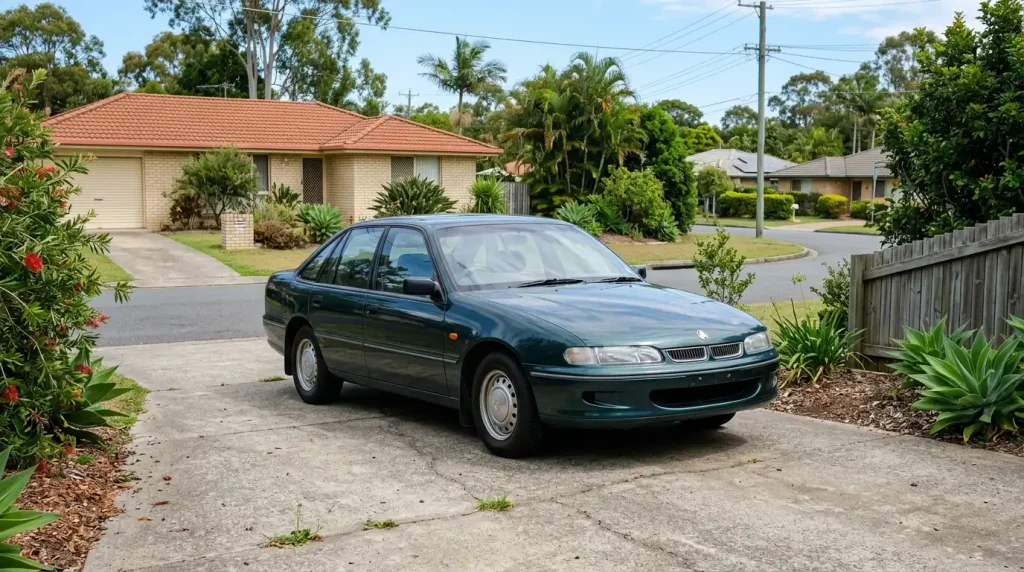
In Queensland, you may need a permit any time you want to drive or tow an unregistered vehicle on a public road for a genuine reason — for example, moving it to a new address, taking it to be sold, transporting it after a Certificate of Inspection (COI) has lapsed, or relocating it ahead of scrapping or recycling. The permit exists because driving an unregistered vehicle on Queensland roads is otherwise not allowed, regardless of how short the trip is or how well the car runs.
A few things are consistent across most permit situations:
If your situation fits this pattern — a roadworthy but currently unregistered vehicle that needs to get from one point to another for a legitimate reason — a permit is usually the correct path.
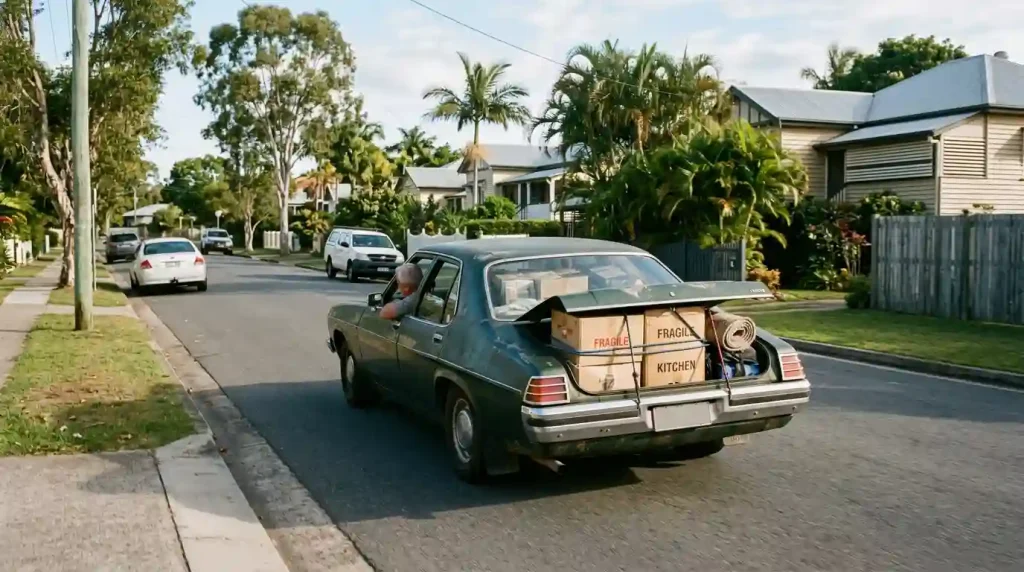
Not every unregistered-vehicle trip requires a permit. The most common exemption Brisbane drivers ask about is moving a vehicle directly to get a safety certificate (roadworthy inspection) or to a transport and motoring customer service centre to complete registration. In these cases, you generally won’t need a separate permit, provided you meet a few conditions:
This exemption is narrow and specific — it applies to that one direct trip, not to general driving while you sort out registration. If the vehicle fails the inspection, or isn’t safe enough to be driven even that short distance, different rules apply (covered below), and towing or transporting the vehicle becomes the appropriate option rather than driving it.
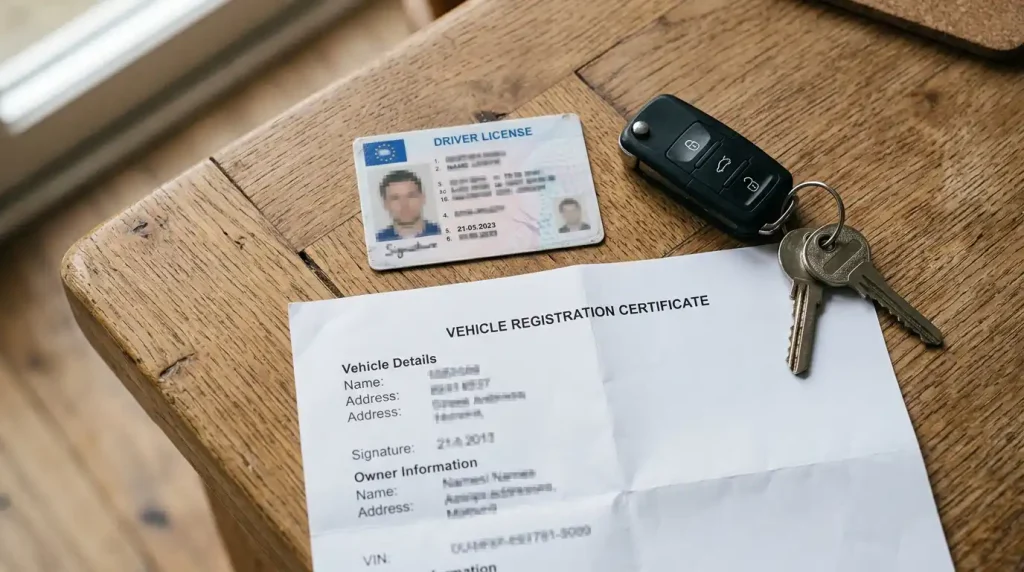
Before applying, it’s worth having the following ready:
Because permit duration is limited to a set window rather than an open-ended period, it’s worth only applying once you’re genuinely ready to make the trip, rather than well in advance.
Queensland offers two main application paths:

If you have a Queensland CRN, you can apply for an unregistered vehicle permit through the TMR online service. This is generally the faster option and avoids a trip to a service centre, but it does require that CRN — without one, the online path isn’t available to you directly.
You can also apply at a transport and motoring customer service centre by completing the unregistered vehicle permit application form. This route is available whether or not you hold a CRN, which makes it the fallback option for anyone who can’t apply online — for example, an interstate owner or someone applying on behalf of a vehicle they don’t personally hold a licence for.
Either way, the permit is only valid for a limited period — issued for roughly the time it should take to complete the direct journey — so it’s designed around a single, specific trip rather than ongoing use.
This is the part many Brisbane owners aren’t expecting: TMR won’t issue an unregistered vehicle permit for every vehicle. A permit generally can’t be issued if the vehicle:
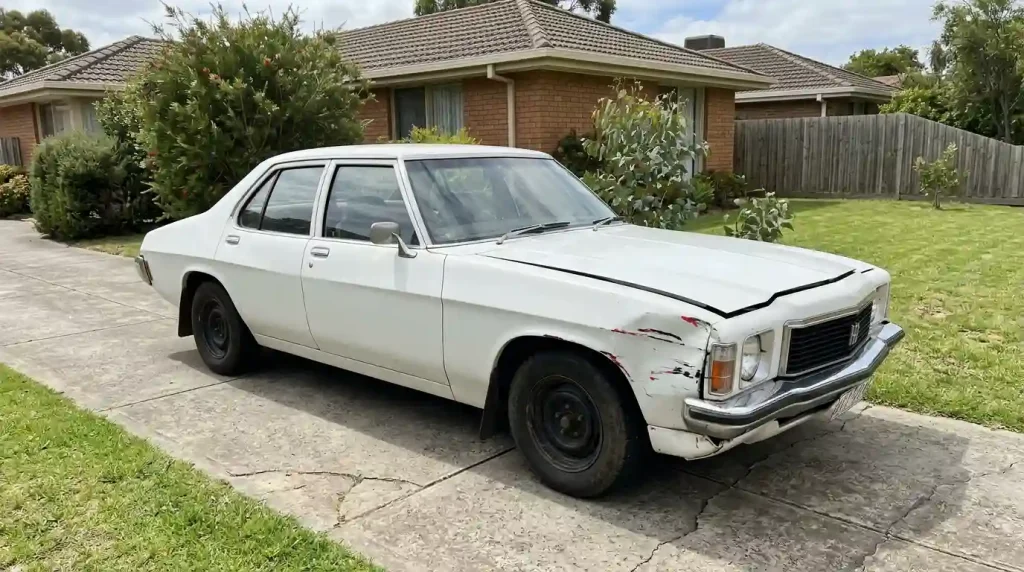
There’s also a critical safety-related rule: if a vehicle fails (or would clearly fail) a safety certificate, gas certificate, or similar inspection, it generally can’t be driven or towed under a permit — it has to be transported instead, usually on a trailer or tilt-tray. In other words, if the car isn’t safe to be on the road under its own power, a permit isn’t the answer regardless of how badly you need to move it.
This is exactly the situation where towing becomes not just convenient, but the only legally compliant option.
Once you understand the permit rules, the real decision for most owners isn’t “how do I apply” — it’s “is a permit even the right move for my situation.” Broadly, there are three paths:
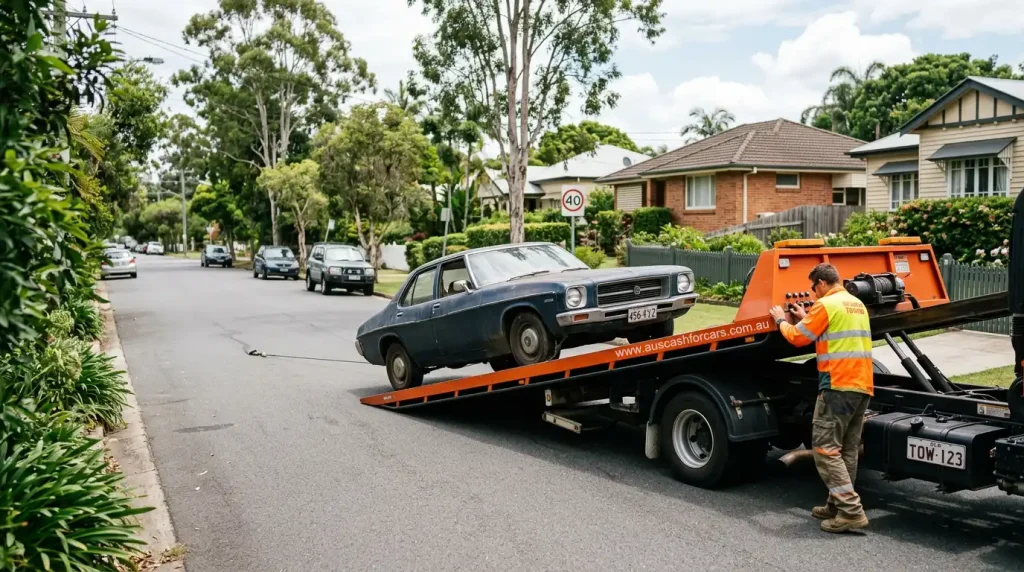
This makes sense when the vehicle is genuinely safe to drive, eligible for a permit, and you have a clear, direct journey — for example, taking it to a roadworthy inspection, or relocating it a short distance before selling or scrapping it.
Towing is the more sensible (and sometimes the only legal) option when the car has failed or would fail a safety inspection, is missing required identifiers, has significant collision or structural damage, or simply isn’t safe to be driven even a short distance. If you’re weighing up options for a vehicle in this category, our guide on car removal Brisbane covers how towing and removal typically works.
For a lot of owners, the honest answer is that going through the permit process for an old, damaged or barely-running vehicle isn’t worth the time, cost or inspection risk — particularly if the car was headed for sale or scrap anyway. In that case, it can make more sense to sell the car in its current condition and let the buyer or removalist handle the transport, rather than applying for a permit yourself. This is especially relevant for vehicles that would fall under cash for junk cars Brisbane or cash for damaged cars Brisbane categories, where the vehicle’s condition already points away from driving it anywhere.
None of these paths is automatically “best” — it depends on the vehicle’s condition, why you need to move it, and how much the permit process is actually worth to you versus simply arranging removal.
Heading into 2027, more Queensland owners are weighing these decisions carefully rather than defaulting to “get it roadworthy and re-register it.” Fuel, parts and repair costs remain a real factor in whether an older vehicle is worth bringing back to compliance, and as newer vehicles, hybrids and EVs become a bigger part of the market, expectations around what a car should cost to run and maintain have shifted.
For a vehicle that’s been sitting unregistered for a while — particularly one with mechanical issues, body damage, or a safety certificate it’s unlikely to pass — spending more money and time chasing a permit and a roadworthy inspection may not add up. In those cases, it’s worth comparing the realistic cost of a permit, CTP, inspection and repairs against simply arranging removal or a sale in current condition. There’s no single right answer here; it comes down to the individual vehicle and what you actually plan to do with it once it’s moveable again. Our overview on how cash for cars services work is a useful next step if you’re weighing that comparison.
No. You generally won’t need one for a direct trip to a safety certificate inspection or a transport and motoring service centre, provided you carry valid CTP insurance and take the most direct route. For most other journeys, a permit is required.
In many cases, yes, without a separate permit — as long as you have valid CTP insurance for the vehicle and go directly, with no other stops. If the car isn’t safe enough to be driven even that short distance, it needs to be towed or transported instead.
Permits are issued for a limited window, generally covering only the time reasonably needed to complete the specific journey by the most direct route — they aren’t intended for general or ongoing use.
You’ll need a Queensland customer reference number (such as your driver licence number), the vehicle’s details, and Class 22 CTP insurance arranged separately from the permit fee. Without a CRN, you’ll need to apply in person instead.
Not always. If a vehicle would fail (or has failed) a safety certificate or similar inspection, or is missing required identifiers like a VIN, TMR generally won’t issue a permit to drive or tow it — it needs to be transported instead.
When the vehicle isn’t safe to drive, has failed an inspection, is missing key identifiers, or simply isn’t eligible for a permit. In these situations, arranging car removal is usually the more practical and compliant path.
If your car is safe to drive and your trip is eligible, applying for a Queensland unregistered vehicle permit through TMR is the correct process to follow. If the vehicle isn’t roadworthy, wouldn’t pass inspection, or simply isn’t worth the cost and effort of getting it moveable again, it’s worth looking at your other options. You can find out more about how the process works if you decide selling or removal makes more sense, or check our FAQ page for other common questions about selling a car in Brisbane. If you’d rather skip the permit process altogether, you can also get a straightforward, no-obligation quote from the Aus Cash for Cars team to see what your vehicle is worth as-is.
We proudly provide a top-class Cash for Cars and Free Car Removals facility to all our clients across Brisbane and surrounding suburbs. Contact us today for a Free Quote!

@ 2022 auscashforcars.com.au. All rights reserved.
Brisbane Web Design, SEO, & Digital Marketing
 Call Us